Day three
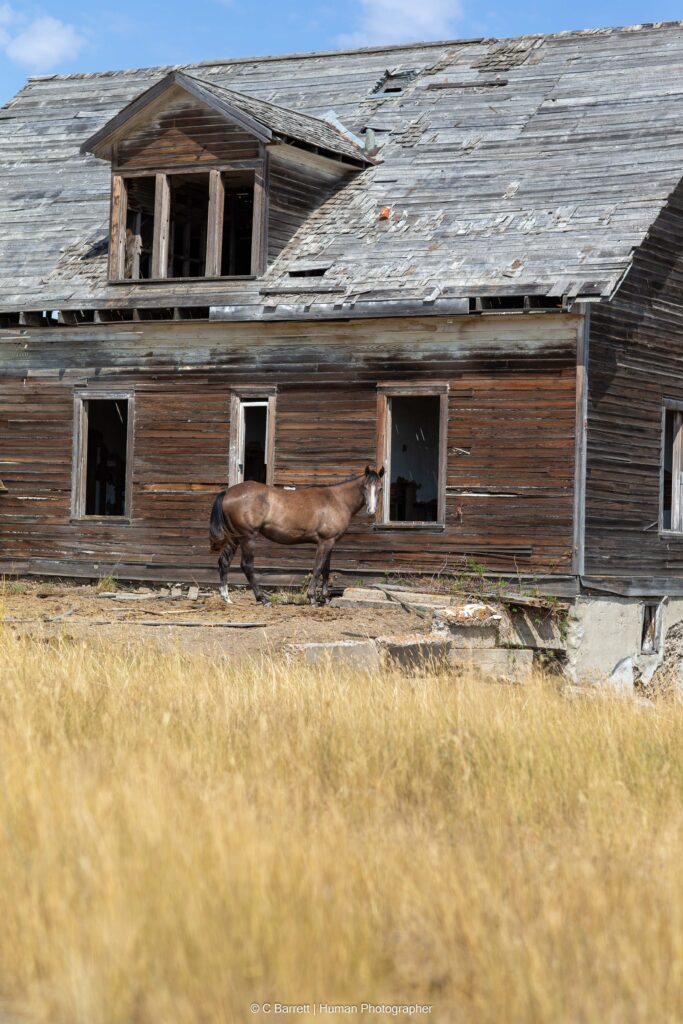
Searching for ghost towns and other relics in rural Alberta leads to some very remote places. Lunch is not always easy to find; routes need to seriously consider the next gas station. Maps on cell phones stop offering advice, and finding the next ‘destination’ can resemble a scavenger hunt with very sketchy clues. Frequently, you don’t find what you’re looking for, but something else entirely.
We started out our day in the Acadia Valley area, heading south on Hwy 41, diverting onto side roads, letting the relics and interesting sites guide our way south. This is ‘wave’ country. Everyone you pass on any of these roads waves at you, and you wave back. It’s a rule.
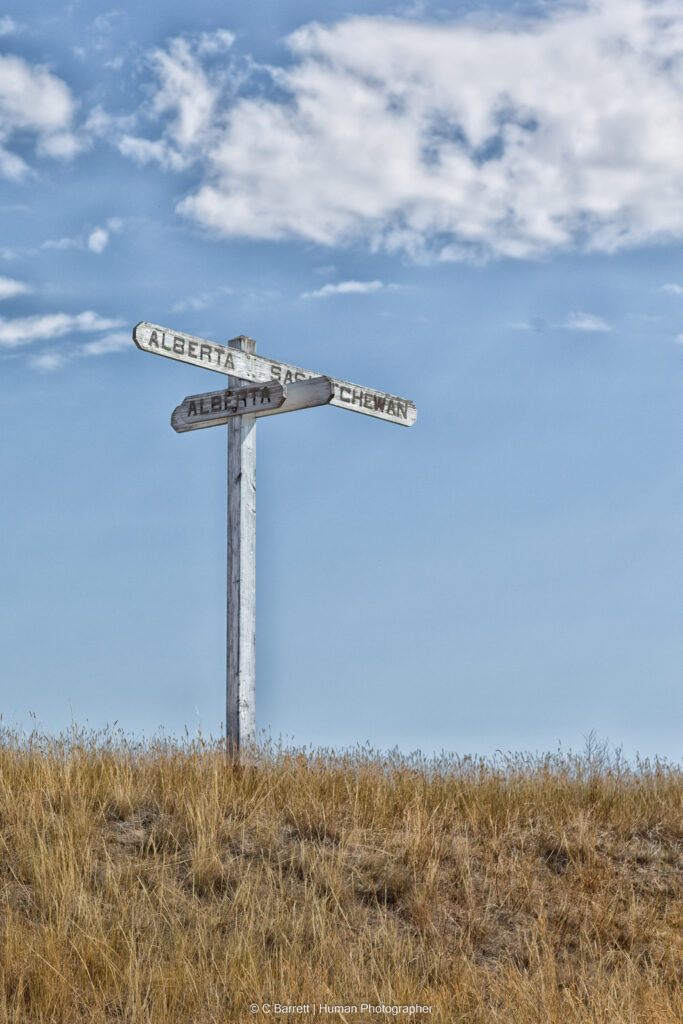
Passing through Acadia Valley we eventually found the town of Empress precisely straddling the Alberta Saskatchewan border. Like many semi-ghost towns, Empress is a mix of the very old, sort of old, and occasionally new. We started on the edge of town where my Dad discovered a collection of ancient vehicles nestled in some trees. I must admit, I do like shooting old cars, but I’m always a bit nervous doing it. Sadly, while we have good intention–taking away only photographs–there are far too many thieves and vandals that would exploit such finds. Farmers and property owners can be understandably cautious; I don’t want to be mistaken for a relic rustler.
There are a couple of tiny churches in Empress, one of which was locked, the other open, inviting visitors.

After a quick check to verify that we were indeed ‘visitors’, we went inside. Great care has obviously gone into preserving some of these old place.
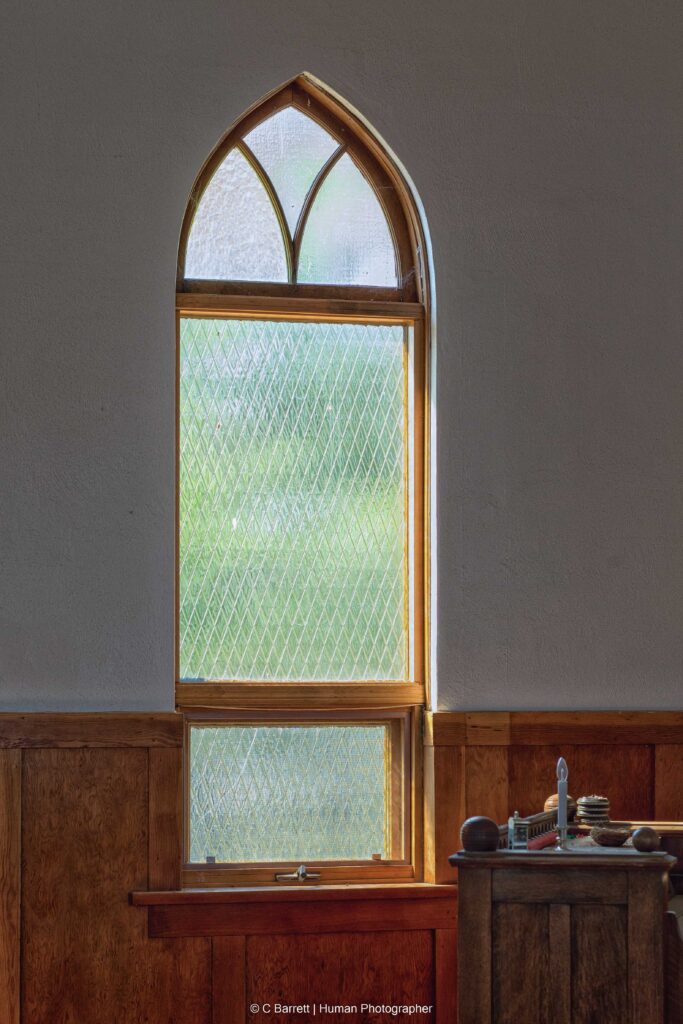
The church appeared as if a service might have just happened, or could soon.
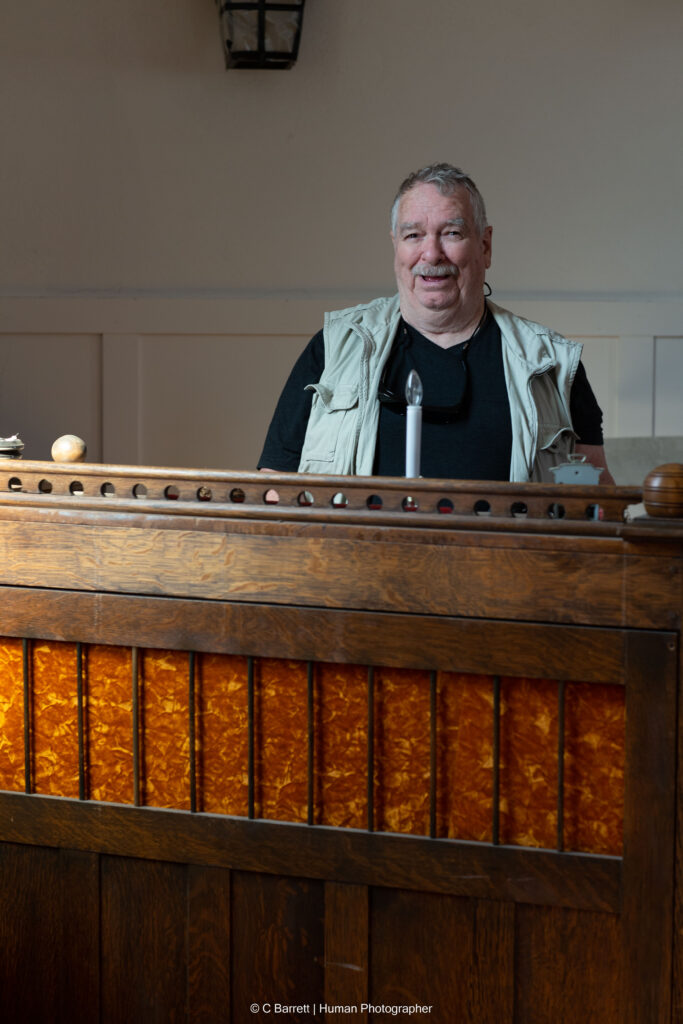
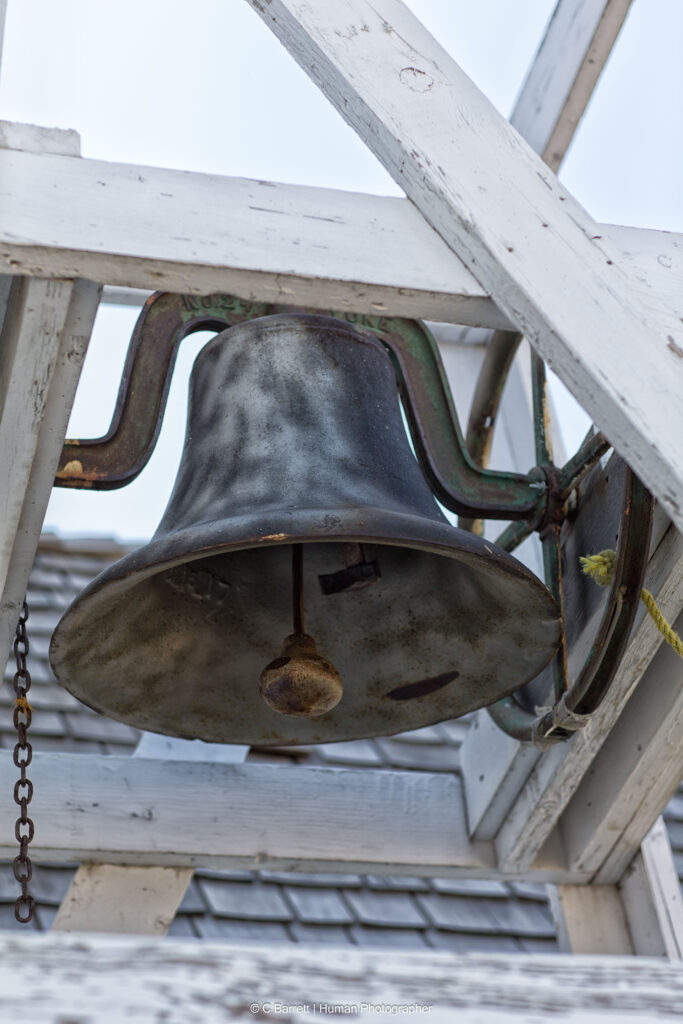
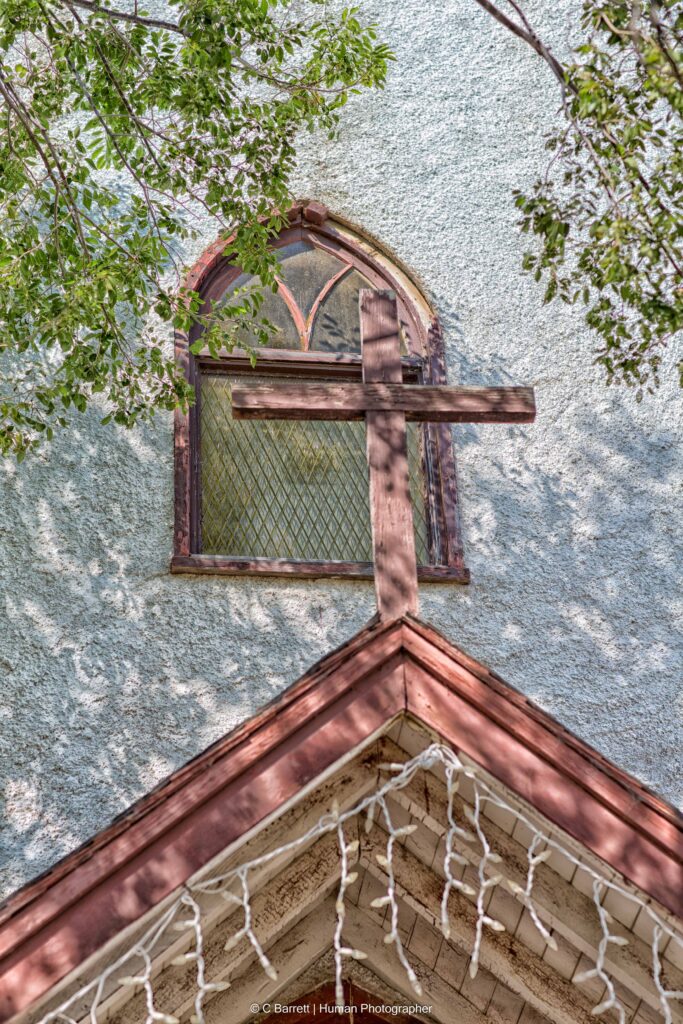
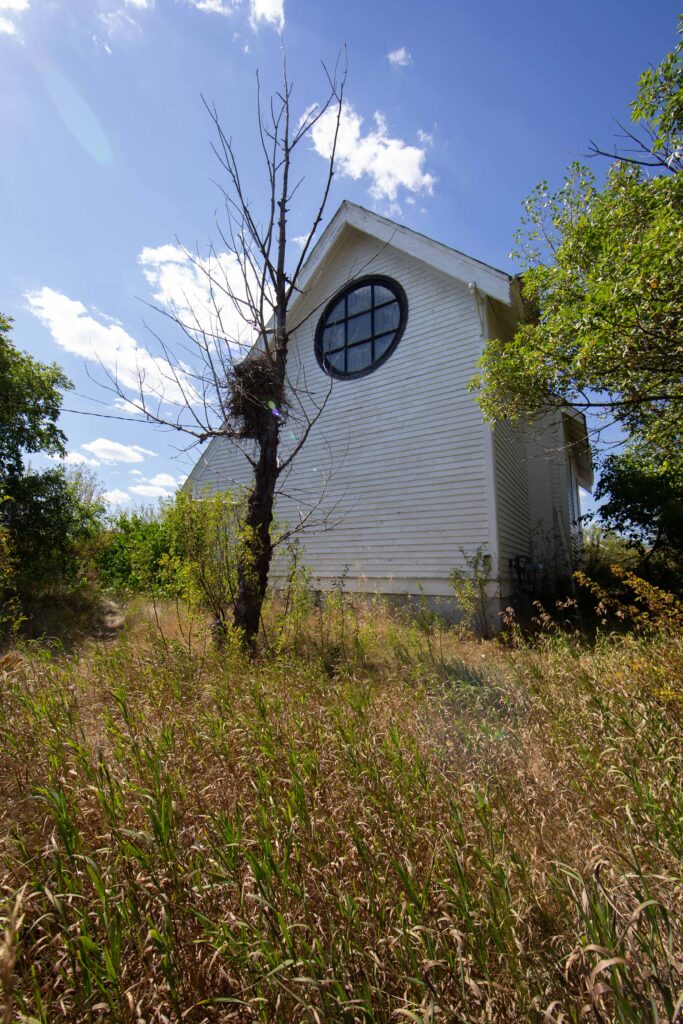
After exploring the two churches we took a spin around town. Empress may have almost been a ghost town, but the current residents seem to have different plans. We pulled up in front of a little store and I went in to find a coffee, and maybe some information about the area.
Nokamis, Oracle of Empress
That’s Empressive, part cafe, part general store, and part gallery, occupies the old bank building in town. Inside, a few patrons sipped tea at a small table by the door. Behind a counter in the middle of the store, a woman called out cheerfully,
“Hello!”
“Hi there”, I said back.
“Can I help you?
It seemed there was genuine surprise in her voice that I had found the place.
“I thought I’d just pop in and look around …”, I replied.
“Are you lost?” she added playfully.
“No, I actually came here deliberately.” I grinned. Her smile grew.
I don’t exactly know where the conversation went next, it just sort of flowed as the enthusiastic lady behind the counter began sorting out who I was, where I’d come from, and why the hell I was in her remote little village. Of course, she was happy about it. She was here deliberately too. Another patron entered and our conversation took a different turn, as she politely turned to declare that the elderly lady who had just entered (sorry, I forgot her name) would be going swimming in the river tonight.
“It’s all over town”, she declared.
Apparently, there was to be a beach volleyball tournament, and everyone would be there. Some very amusing observations about this were passed around the room by the locals.
The store lady returned her attention to me and said,
“I need to talk to you some more. Come have a seat over here”–she gestured to a small table beside an open bank vault–“and we’ll have a coffee.”
As politely as it was delivered, it was still less of a request and more a gentle command. I sensed this woman had some interesting things to say. I excused myself long enough to summon my Dad who was sitting in the car outside, and we settled into the corner table.
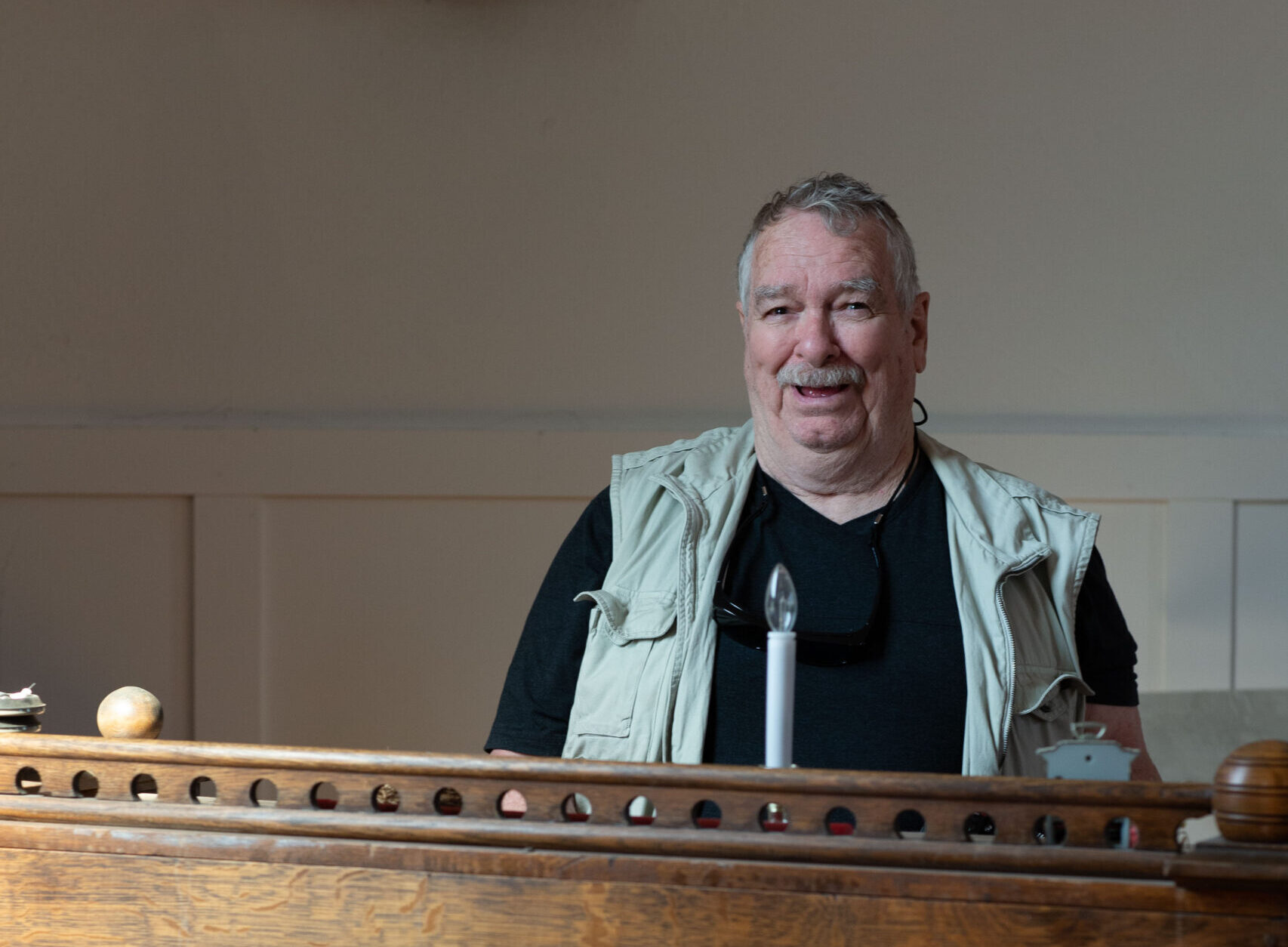
We learned that Nokamis (aka Pat) was born in a traditional Ojibwa community, far off the beaten path, north of Thunder Bay, Ontario. She shared the space behind the counter with Ross, her husband, a grey-haired gentleman who seemed to never stop moving as he ran from making tea, to sandwiches, to searching for corn syrup (which Nokamis already knew they didn’t have), to repairing a watch for a local that wandered in while we awaited our coffee. Behind the small counter Ross danced delicately around from chore to chore while Nokamis, rolled around him on her scooter in a seemingly coordinated pattern that kept them from tripping over each other.
With our coffee (and my Dad’s tea) ready, Nokamis pulled up to our table and set out to educate us on all things Empress. She is a story teller, and a damn good one. More than a simple inventory of facts, Nokamis opened up the past for us, and took us on a whirlwind tour of Empress from its earliest days, when the CNR had envisioned a city between Swift Current and Calgary. Those intentions were not without action: at one time the town included a round house for the railway, a hospital, and plans for much more. WWI put a stop to it all, as national priorities shifted to defeating Germany. While the plans were picked up again, later, another great war eventually put a nail in the coffin for the expansion of Empress. When trucks became more popular in the years following WWII the critical role played by the railroad rapidly diminished, and the grand plans for Empress, like many other small western communities, faded from memory.
The void left by the railway doomed a lot of prairie towns, but Empress survived, and today they are clearly bucking the trend. A few artisans, a few small businesses, and a community that won’t quit loving the landscapes and lifestyle in this part of the world, appear to have carved out a small piece of paradise (I wasn’t there in winter). The railroad station was restored, and recognized as an historic site; an ATB branch sprung up. The population appears to be growing, albeit slowly–one dedicated artisan or entrepreneur at a time–and with the momentum of sheer will on their side, I can envision a much different outcome for Empress. I even checked out the real estate: one can own the old hospital in town and the acre of land on which it sits for a mere $45,000. A few serviced lots in town go for around $8,000. It makes one question what the hell we’re doing in a city.
But the reality is inescapable, for now. I didn’t buy a lot (yet), and our road trip eventually meant that Empress would be in the rearview mirror (hidden in the dust from the gravel road). Later, my wife and I pondered whether we could live in such a place; after a quick inventory of our real priorities, we both agreed that we probably could.
Before we departed I had a good look around the gallery and found more than enough reason to return. Nokamis had gathered a wonderful collection from artists and artisans, among which her own work (painting and jewelry), looked perfectly at home. Nokamis’ work often highlights experiences of her own childhood. With a few simple strokes of a brush she invokes images of simple moments played out against the background of her northern home.The images grow on me; the more I look, the more I want to look. There is a sense of honesty in her work; subtle insights about life and family that are whispered, not screamed. I grabbed a few prints that reminded me of my own three daughters: My favourite: Nokamis, wearing a frown on her face, walking to school with her mother, while her younger brother enjoys a ride on a wooden sled. The Nokamis we met didn’t seem to hold a grudge about it … well, maybe just enough for inspiration.
This one goes in the file: Places to which I must return soon.