Originally published:
In Alberta You Don’t Pay the Ferryman
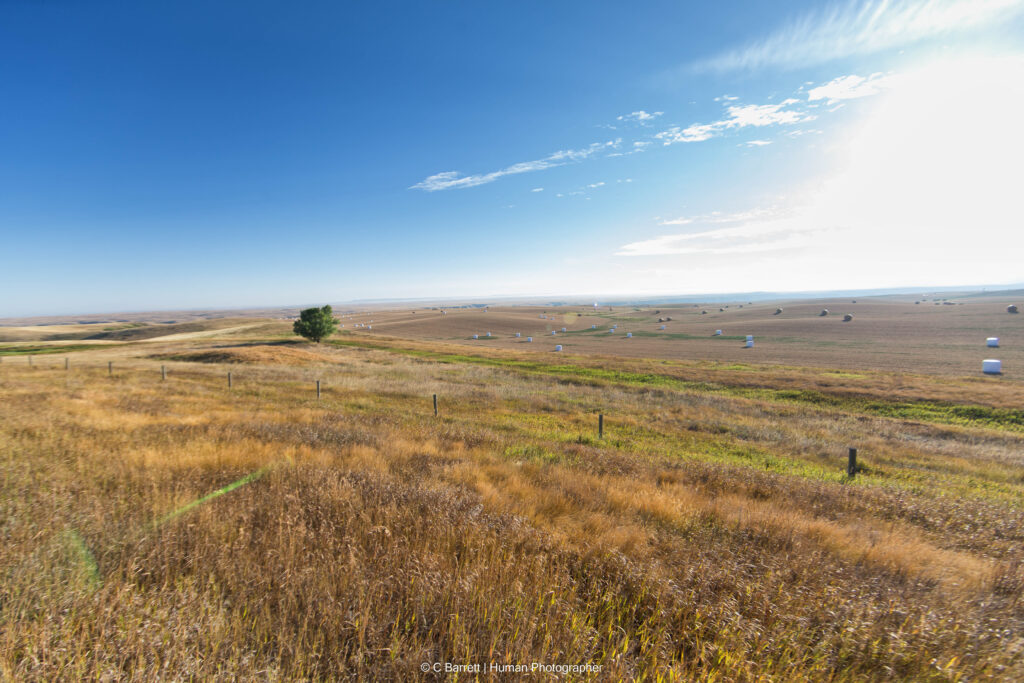
Slicing almost due west from the strange tower, we kept to back roads, making our way towards the Red Deer River. All along the way the land teased of something different, just over the horizon. The GPS, iPhone and Alberta Atlas (that’s an actual paper map, kids) disagreed on the best path forward. I had yet another view. In the end we only wandered in circles for an extra hour; not bad. Eventually, we emerged on pavement. There were fast moving vehicles. Time to wake up.
We spotted the first sign of rain since leaving Edmonton. A compact storm weaved across the field ahead of us, a dark shadow dancing in shards of the brilliant afternoon sun. We passed, accumulating only a spatter of moisture on a bug smeared windshield. We drove on a plain that seemed to form the top of a large table, on which we could barely discern the edge in the distance, but we sensed it was there. Off the road, in the middle of a distant field, an odd, dark spot didn’t move at all.
“Antelope!” I said it with the reverence of a well-sheltered city boy.
“Where?” My father squinted into the horizon.
We were well past it now. I pulled off the road and waited for an opportunity to make a u-turn. Now crawling up the opposite shoulder I kept an eye on the speck. My Dad pulled out his red camera. This is a little Nikon point-and-shoot that gets dragged out whenever he needs a picture of a satellite, or a grain elevator in the next county. It has a 1000mm zoom lens. As we pulled up level with the antelope it was clear that a photo would be a challenge even at 1000mm.
In reality, what we call the American Antelope is actually a Pronghorn, a lone holdover from the pleistocene period. It’s here because everything big enough and fast enough to hunt it, didn’t survive the last Ice Age. The only thing on earth faster than a pronghorn is a cheetah, and a cheetah will burn out much sooner. And also, cheetahs don’t live here.
My Dad actually got some shots. It was a big deal, a first for us both, and a cool glimpse at a very unusual creature. If you live in Southern Alberta you probably see a lot of pronghorns. In Edmonton, not so much.
Another back road, and another, we wove a path to our river crossing at Finnegan. We found it at the bottom of a steep hill. This makes perfect sense, that’s where the river was. A sign invited us to ring the bell to summon the Ferryman. I debated queuing up Chris Deburgh on the stereo but thought it might be a bit cliche. Can’t imagine a ferryman’s ever heard that before …
A moment passed and the platform-barge began to slowly creep forward, guided by steel cables on either side. Eventually we got the signal, and we were aboard the floating driveway, headed for the other side.
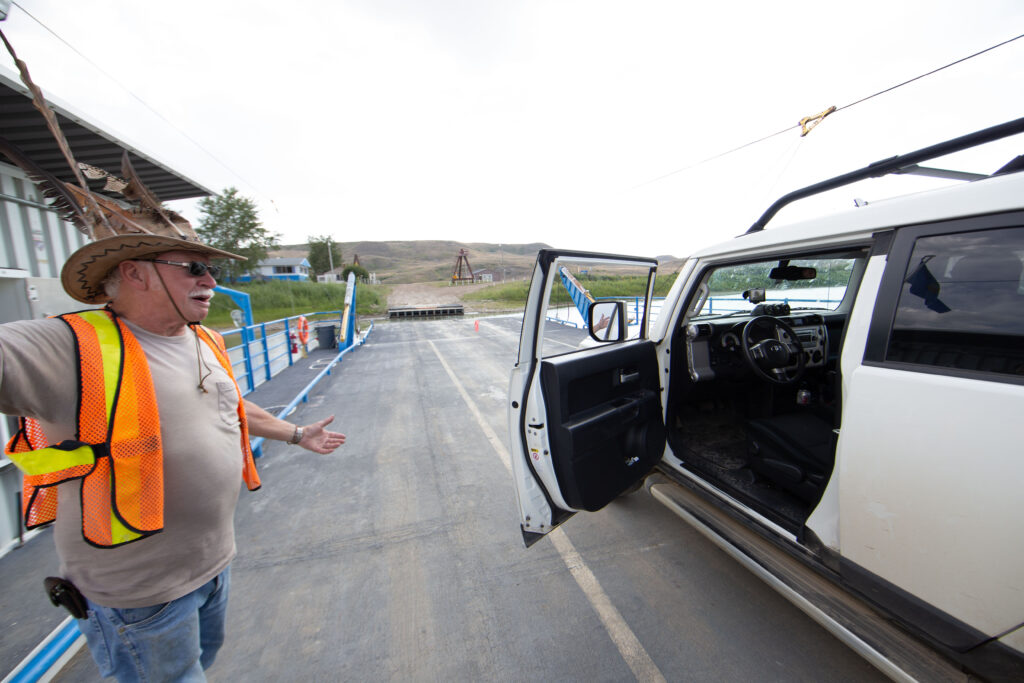
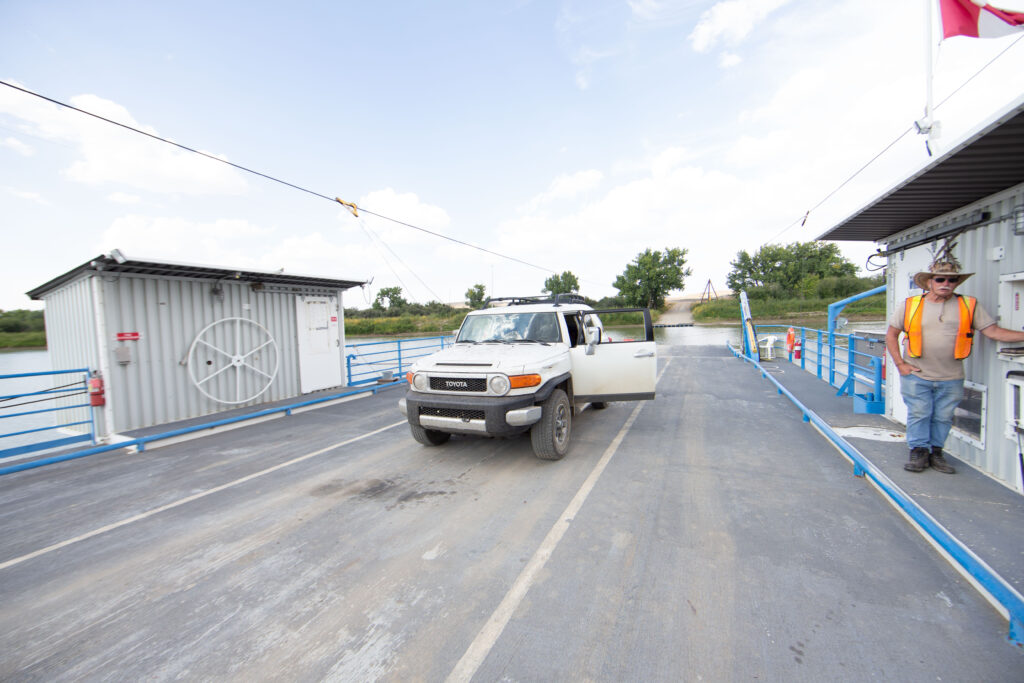
The Ferryman was from Lacombe, Alberta, though he had been born somewhere nearby Finnegan. He said it was the first job he ever wanted, and it would probably be the last one he’d have. It was a good gig. He worked 6 months of the year, 12 hour shifts, 4 days on, 4 days off, living in the house by the ferry dock. Sometimes it would be slow so he could fish, explore, indulge in hobbies, he had satellite TV, Internet, air conditioning–as long as he’s available when the bell rings. It might not appeal to some but there was a high degree of independence, and a good measure of soul calming solitude.
We thanked the ferryman, we could have stayed a lot longer; it wasn’t busy and he looked like he had a lot of stories, but the afternoon was drawing to a close, and the warning light on my gas gauge refocused me on the road ahead.
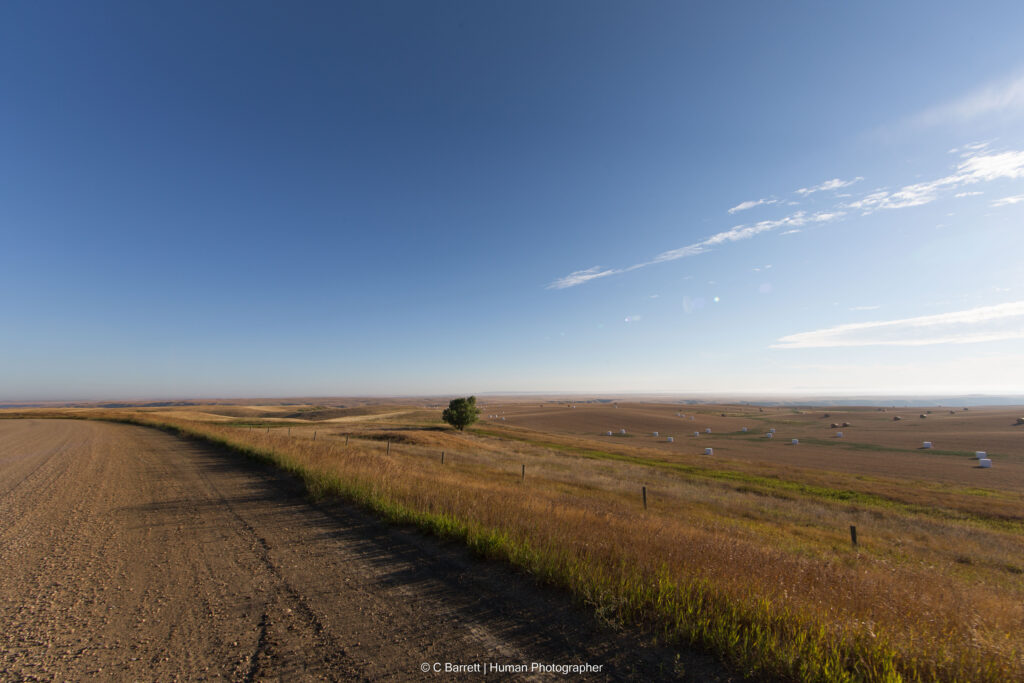
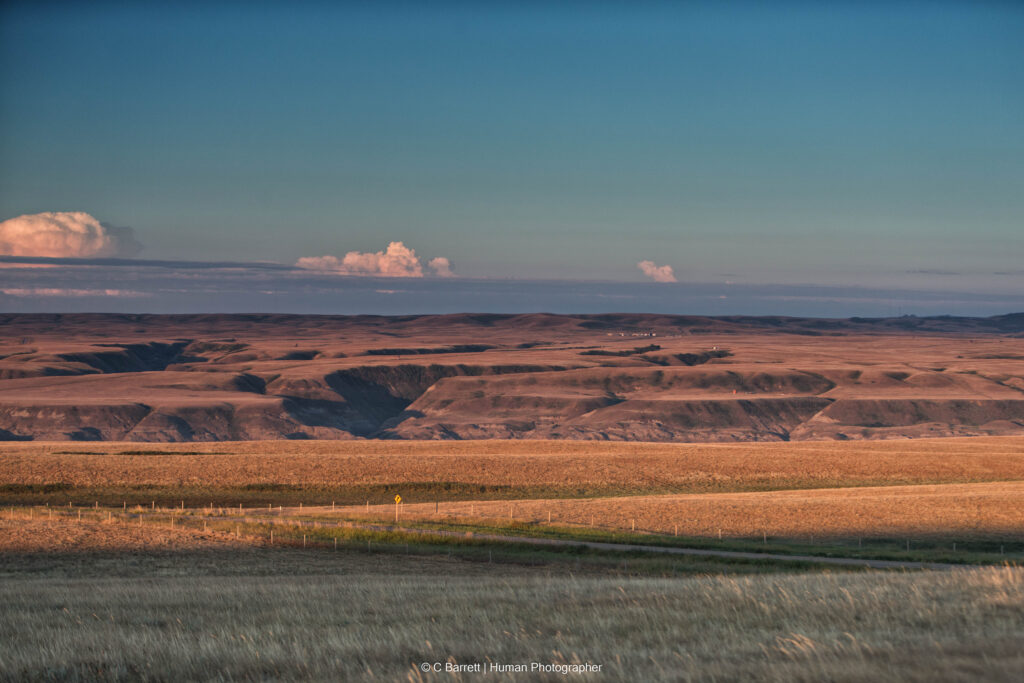
From Finnegan the road to Dorothy follows the Red Deer River. The hints of a changing landscape are more frequent; the horizon begins to reveal gaps, soft shouldered canyons–distant forms that resemble painted backdrops from old movies. Then somewhere between Finnegan and Dorothy a long curve corkscrews into the land and we emerge in a long canyon, carved by the meandering Red Deer River. It first assaults one’s sense of scale. We were suddenly dwarfed in a landscape built for giants. As we descended into the valley the village of Dorothy came into view. The plain on which we had been riding for days now loomed above us as we followed the river toward Drumheller. We marked some spots for sunset, later, before heading into Drumheller.
Badlands, Good Light
Badlands is actually a generic term for the type of landforms we see in the Drumheller area. They exist in several places around the world, but the best of them are here in North America. This is a land carved by water and wind. Mesas, buttes, valleys, bands of vivid colour reveal layers of ancient history on canyon walls. Dinosaurs could have lived here. It’s a very big place. Fauna as strange as the land itself clings to life in precarious, windblown places, while fertile ground explodes with the colours of summer in the flat valleys below. We had considered trying for some sunset images in the previous days, but a lack of good cloud formations and poor location planning held us back. We were confident that would change tonight.
We ate, gassed up, and sped back down the road towards Dorothy. Sunset would be at 9:01, but in these deep canyons it could disappear much sooner than than. We set up first on a piece of ground overlooking the river. The sun did it’s job almost immediately.

A little further down the road and we picked a spot on the bridge at Dorothy.

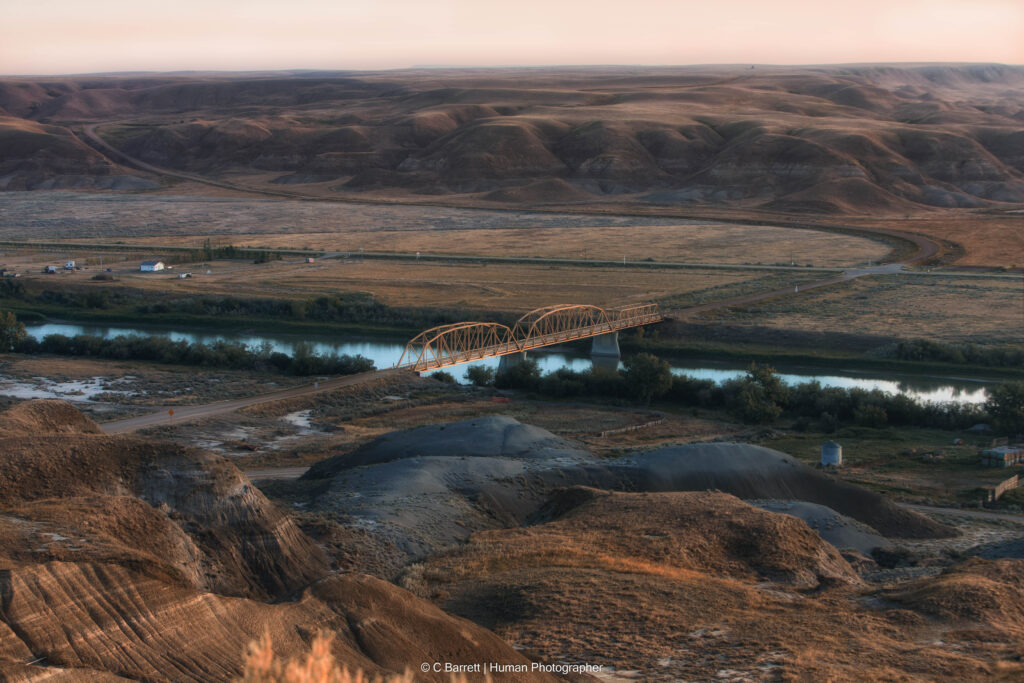
The bridge at East Coulee, shot from the bridge at Dorothy.
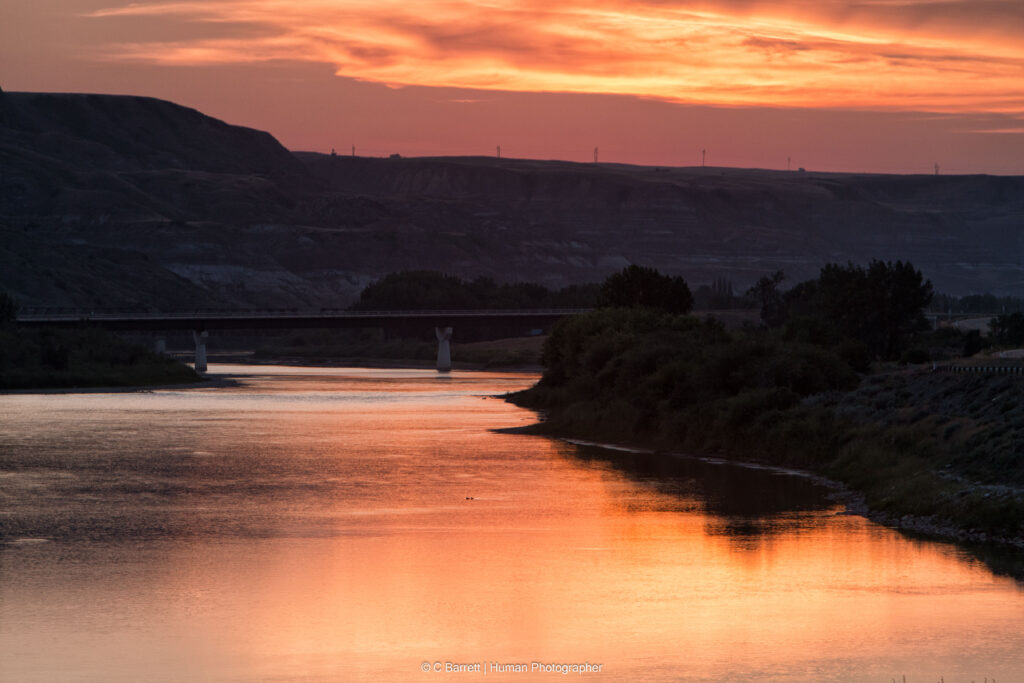
They might be the most photographed phenomena, but a good sunset can still get my geek heart beating, We also realized that the east-west orientation of this valley could produce a very nice sunrise, so we committed ourselves to an early morning back in the same area.
Sunrise Over Dorothy
In the near dark, awaiting the rising sun, we sat on the high ground above Dorothy. As the first light began to seep into view the terrain become an alien landscape; soft rolling hills etched out of the darkness by feint highlights and deep shadows.

Blue tones of the hills in shadow meet the first light of dan. A moment later a warm glow spreads across the ground.
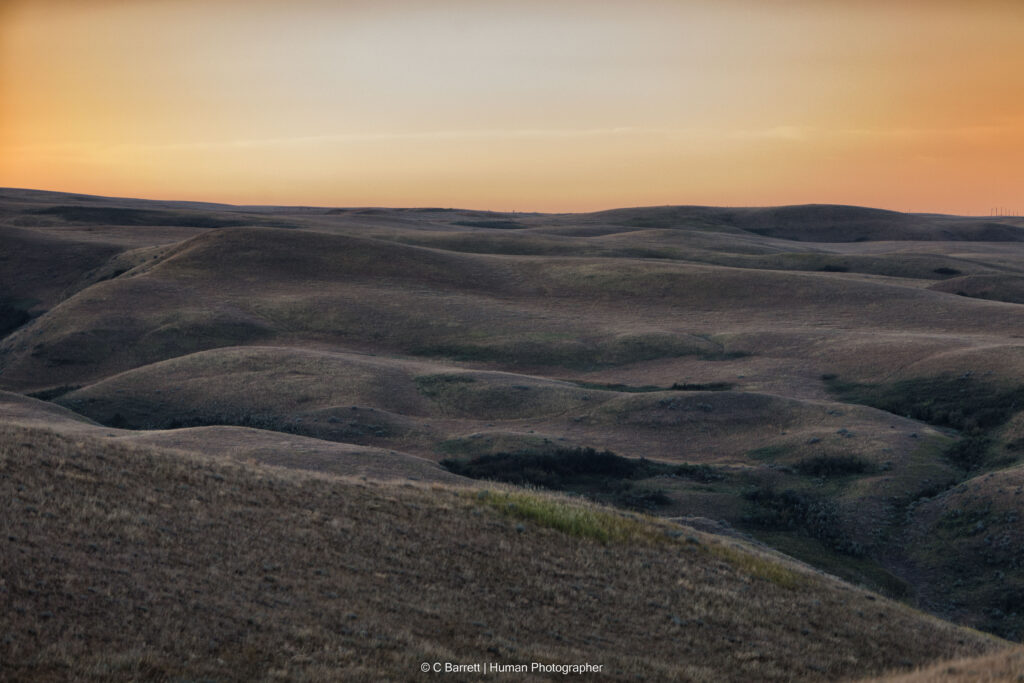
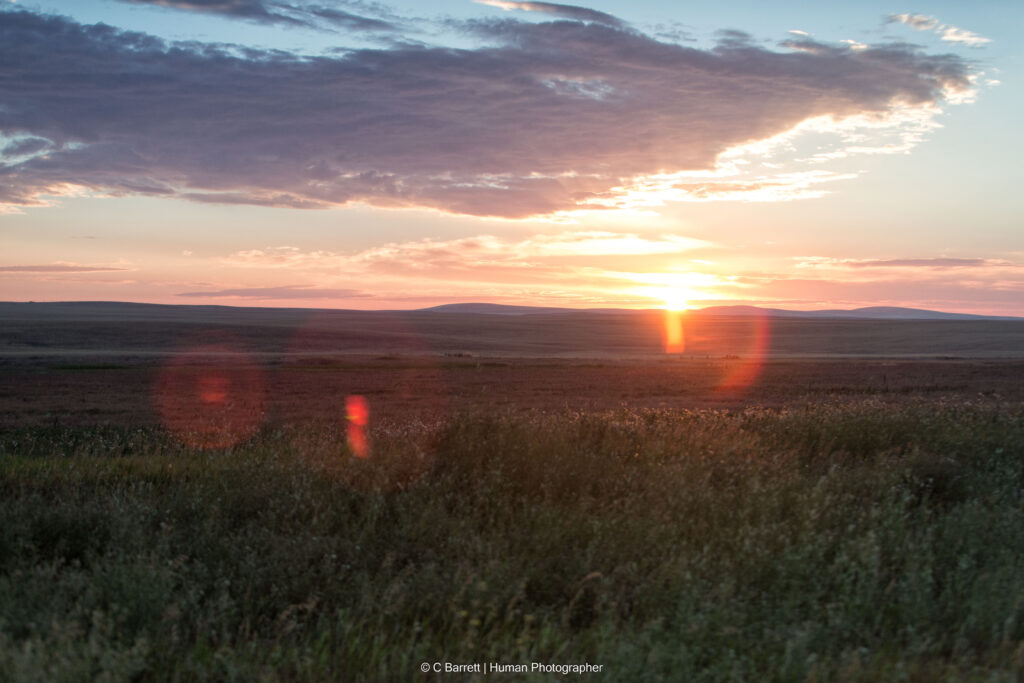
The soft light of dawn transforms the badlands into watercolour hues of amber and gold.

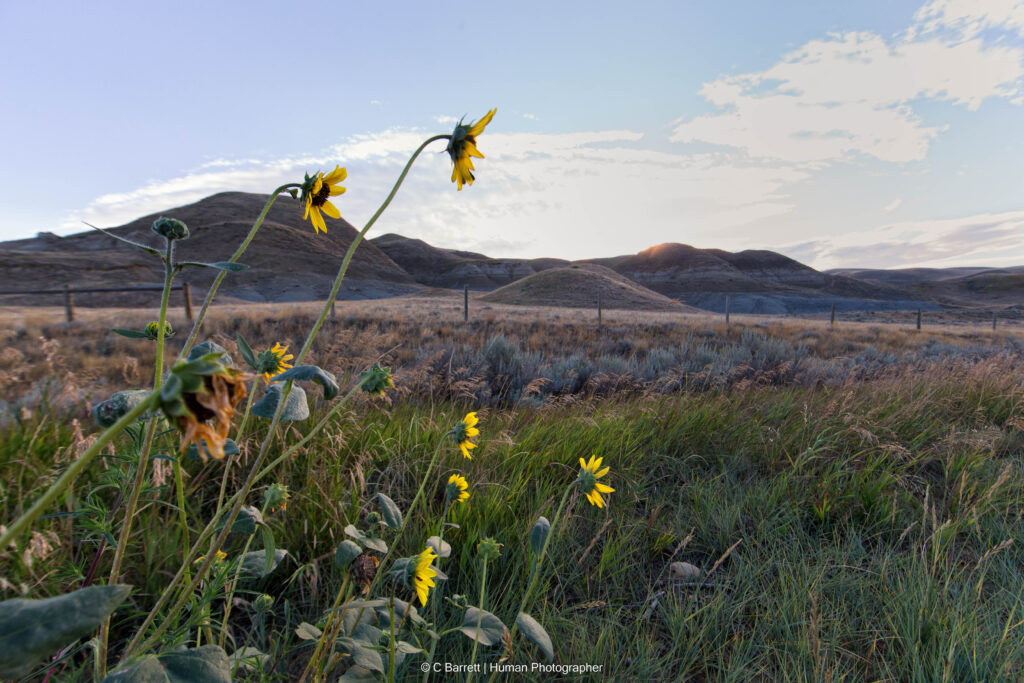
On the other side of the hill, lower in the valley, we found wildflowers awakening to the sun, and watched as they slowly rose and turned to the growing light.
The height of the canyon delays the sun from reaching the valley, enabling us to work several locations as we followed the sunrise. Here is the bridge at East Coulee meeting the dawn.
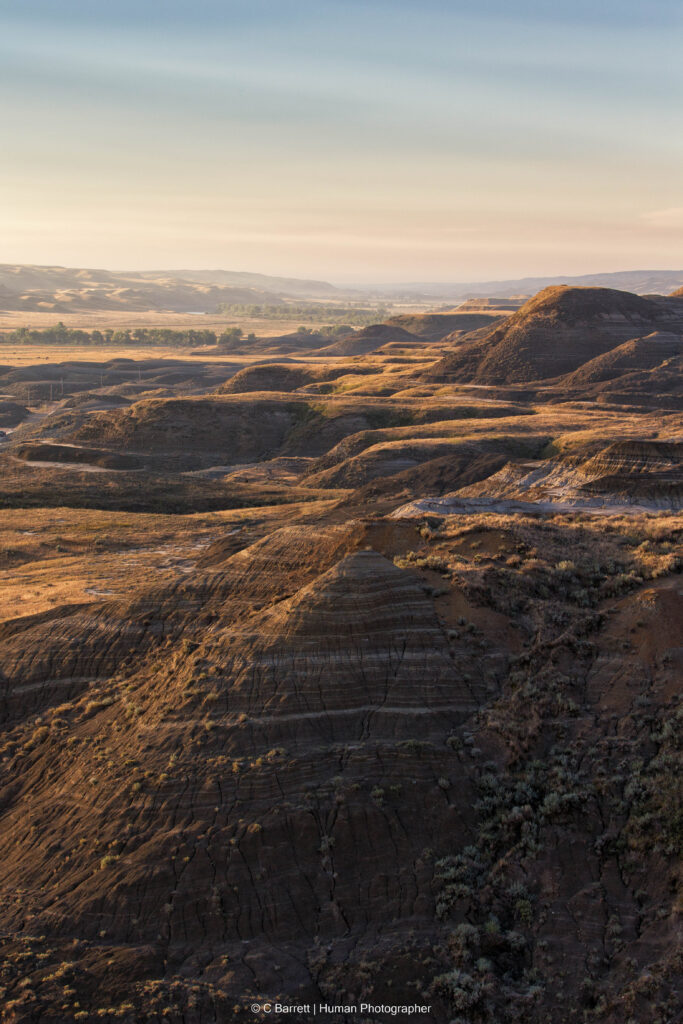

We followed the morning light from the high ground south of the river, eventually returning to Drumheller, and a well-deserved breakfast at Whif’s Flapjack House.